
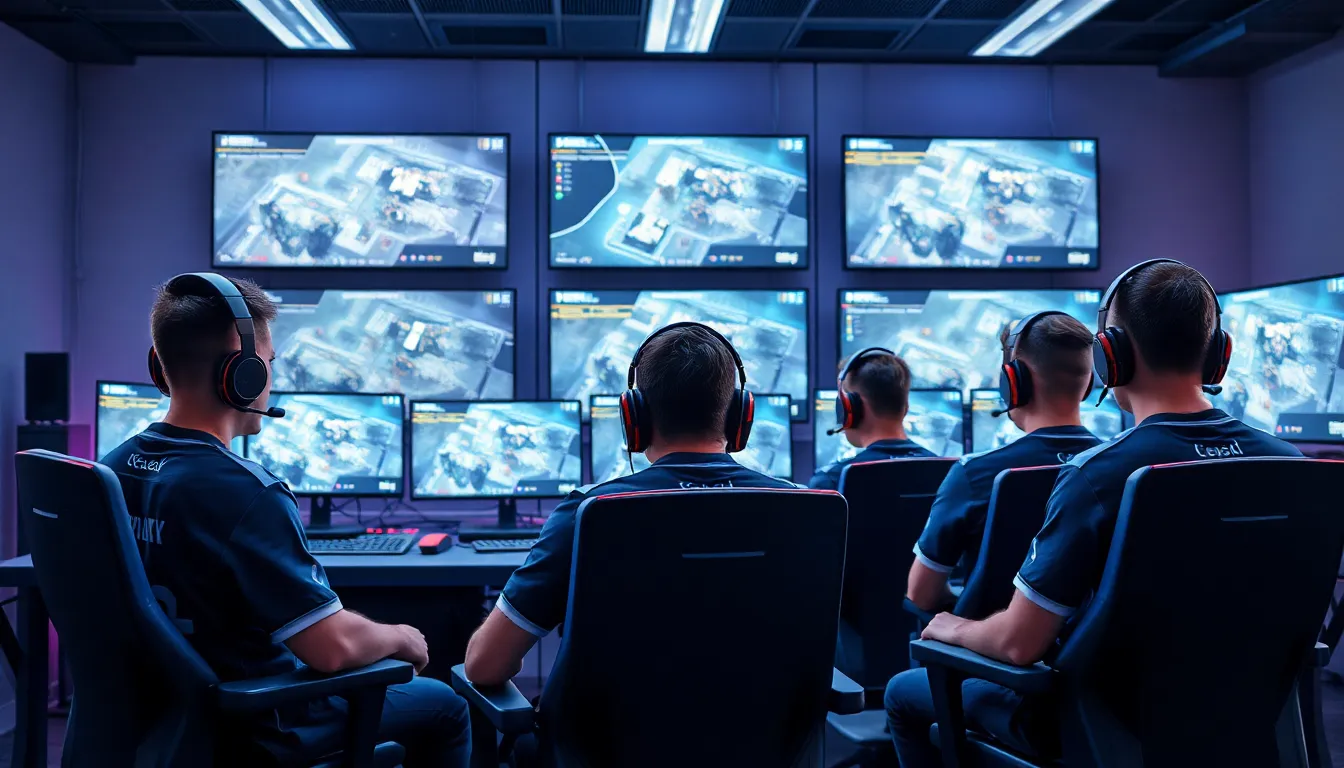
Rainbow Six Siege examples show why this tactical shooter remains one of the most skill-intensive games in esports. From operator synergies to clutch moments, Siege rewards preparation, teamwork, and split-second decision-making. Whether players are learning the basics or refining their competitive edge, studying real gameplay scenarios offers the fastest path to improvement.
This article breaks down practical Rainbow Six Siege examples across four key areas: operator compositions, map control, communication, and high-level plays. Each section delivers actionable insights that translate directly into better performance.
Table of Contents
ToggleKey Takeaways
- Rainbow Six Siege examples demonstrate that operator synergies like Thermite-Thatcher pairings and balanced team compositions directly impact round outcomes.
- Map control separates skilled players from average ones—clearing rooms systematically and using vertical play forces defenders into predictable positions.
- Effective callouts include three key elements: location, operator, and action to give teammates actionable intel instantly.
- Clutch situations in Rainbow Six Siege require time management, utility baiting, and composure rather than rushing into engagements.
- Studying pro league highlights and reviewing personal gameplay losses reveals patterns that accelerate improvement faster than casual play alone.
Tactical Operator Examples and Team Compositions
Operator selection defines the outcome of most Rainbow Six Siege rounds. Strong team compositions combine hard breachers, intel gatherers, and support operators into a cohesive unit.
Attack Composition Examples
A classic attack setup pairs Thermite with Thatcher. Thermite opens reinforced walls. Thatcher disables defender gadgets that block those breaches. This combination works on nearly every bomb site in the game.
For vertical play, teams often run Sledge or Buck above the objective. These operators destroy floors to create angles on defenders below. Adding a Nomad protects flanks with her Airjab mines, letting the team focus forward.
Defense Composition Examples
Defense compositions in Rainbow Six Siege examples typically start with anchor operators. Mira provides intel with her Black Mirrors. Smoke denies plant attempts with his toxic gas canisters. Jäger protects the site from grenades and flashes.
Roamers like Vigil and Caveira slow down attackers and gather intel. A balanced defense uses two anchors, two roamers, and one flex player who adapts to the situation.
Synergy in Action
Consider this Rainbow Six Siege example: Kaid electrifies a reinforced hatch from below while Bandit covers the main wall with his batteries. Attackers now need both a Thatcher and a vertical player to open the site. That’s resource denial through operator synergy.
Map Control and Strategic Positioning Examples
Map knowledge separates average players from skilled ones. Rainbow Six Siege examples of smart positioning show how angles, rotations, and site setups win rounds.
Attacking Map Control
Taking map control means clearing rooms systematically before pushing the objective. On Consulate, attackers often take Piano and Visa first. These rooms provide safe positions to drone and execute.
Vertical control offers another angle. On Oregon, attackers breach the floor above Kitchen to deny defender rotations. This Rainbow Six Siege example forces defenders into predictable positions.
Defensive Positioning
Defenders use site setups to create crossfires and deny entry points. On Clubhouse, defenders reinforce Armory and hold Cash from multiple angles. One player watches tunnel. Another holds the main doorway. A third provides backup from the back of the room.
Off-site anchors also matter. Holding a room adjacent to the objective delays attackers and wastes their time. Every second counts in Siege.
Rotation and Repositioning
Static positions get players killed. Strong Rainbow Six Siege examples show defenders rotating after firing. Shoot, relocate, hold a new angle. Attackers should do the same, peek, gather info, reposition.
Map control isn’t about aggression. It’s about denying options to the enemy while keeping options open for the team.
Effective Communication and Callout Examples
Communication wins rounds. Rainbow Six Siege examples of good callouts give teammates the information they need to act fast.
What Makes a Good Callout
A strong callout includes three elements: location, operator (if known), and action. “Jäger, white stairs, pushing you” tells a teammate exactly what they face. Compare that to “Someone’s there.” The difference is survival.
Callouts should be short. Long explanations during gunfights distract teammates. Say what matters, then stop talking.
Common Callout Examples
Every map has named locations. Learning these names takes practice but pays off quickly. On Bank, players call “CCTV,” “Lockers,” and “Tellers.” On Coastline, “Aqua,” “VIP,” and “Sunrise” identify key areas.
Here’s a Rainbow Six Siege example of a useful callout sequence:
- “Drone in Kitchen, one defender on site.”
- “Mira window facing main door.”
- “Roamer last seen Blue hallway.”
This information lets attackers plan their push without walking into traps.
Ping and Drone Communication
The ping system supplements voice comms. A quick yellow ping marks enemy positions for teammates without revealing the droner’s voice. During clutch situations, pings often communicate faster than words.
Drone work itself represents a key Rainbow Six Siege example of teamwork. One player drones while another follows behind, ready to shoot marked targets. This “droning in” technique reduces deaths from unknown angles.
Clutch Plays and High-Level Gameplay Examples
Clutch situations test everything: aim, game sense, composure, and creativity. Rainbow Six Siege examples from competitive play reveal what separates professionals from casual players.
The 1vX Mentality
Clutching starts with time management. Rushing leads to mistakes. Slow play forces defenders to reveal themselves. In a 1v3, the solo player has the advantage, they know all enemies must come to them during a post-plant situation.
Professional players often bait utility before engaging. Throwing a flashbang forces a reaction. That reaction provides intel or an opening.
Pro League Highlights
ESL and BLAST events showcase incredible Rainbow Six Siege examples. Canadian’s famous 1v4 clutch on Coastline demonstrated perfect crosshair placement and trigger discipline. He waited for each attacker to expose themselves, then punished the mistakes.
Another example: Beaulo’s aggressive entry fragging style. He pre-fires common angles and uses movement to throw off defenders. His Rainbow Six Siege examples show that mechanical skill, combined with map knowledge, creates consistent success.
Learning from Mistakes
Reviewing losses teaches more than celebrating wins. Recording gameplay and watching deaths reveals patterns. Did the player die from the same angle twice? Did they ignore a common roamer spot?
High-level Rainbow Six Siege examples demonstrate constant adaptation. Players adjust strategies mid-match based on what the enemy does. That flexibility, not just raw aim, defines elite performance.